Printable day plans, phrase cheat-sheets, emergency numbers — for no-signal days in China.
Before you go
Entry and visa
Entry eligibility depends on your nationality, passport, route, arrival point, and length of stay. Some travelers may qualify for visa-free entry or visa-free transit through Beijing, but the rules are not universal. Check your exact itinerary with an official Chinese embassy, consulate, or National Immigration Administration source. Re-verify before travel.
Carry your physical passport every day. Hotels and intercity trains require identification, while the Forbidden City, Tiananmen Square, museums, and other reserved attractions may check it against the booking. A photograph or photocopy is not a reliable substitute.
Money
Set up both Alipay and WeChat before departure. Link an eligible foreign bank card and complete identity verification where the apps permit it. Foreign-card support, verification procedures, transaction fees, and payment limits can change. Re-verify before travel.
Keep both apps available because a payment or transport function that works in one may fail in the other. Carry roughly ¥300–500 in cash as backup, preferably in smaller notes. Chinese law recognizes cash, but some small businesses and machines are designed primarily around QR-code payment. Ask staff to help you scan the merchant’s code if the English interface stalls.
Beijing Subway gates may accept supported mobile transport codes or international bank cards under current arrangements, but compatibility is not guaranteed. Re-verify before travel. A staffed ticket machine or service counter is the safest fallback.
For the full step-by-step setup — linking a foreign card, verification, and backup options — see How to Pay in China.
Connectivity
An international roaming plan or travel eSIM arranged before arrival is usually simpler than buying a mainland SIM. Confirm that the plan provides service in mainland China and whether it routes data in a way that keeps your required foreign services accessible.
Some foreign websites and apps may be unavailable over ordinary mainland internet connections. If you rely on specific messaging, mapping, email, or work services, arrange a lawful and reliable solution before arrival. VPN availability, legality, and performance can change. Re-verify before travel.
Download offline Chinese in your translation app and save hotel and attraction names in Chinese. A screenshot is useful when mobile data fails.
Essential apps
- Alipay: QR payments, transport functions, and access to Didi ride-hailing. Some embedded services remain partly in Chinese.
- WeChat: payments, hotel communication, and attraction mini-programs. Many official booking systems use WeChat and may have limited English.
- Apple Maps or Amap/Gaode: Apple Maps is easier for many English-speaking iPhone users. Amap has stronger local detail but much of its interface is Chinese.
- Trip.com: English-language hotel and intercity-train booking. Enter passport details exactly as printed.
- Railway 12306: the official railway platform. It supports foreign-passport accounts, although Trip.com may be easier for a first booking.
- Didi: ride-hailing through its app or Alipay. Use the pinned destination rather than relying on spoken English.
- An offline translation app: download Chinese before departure and enable camera translation.
Day 1: Tiananmen, the Forbidden City, and Jingshan
Morning
Start at Tiananmen Square (天安门广场) around 08:00. Use Tian’anmen East or Tian’anmen West station on Metro Line 1 and follow police instructions to the designated security entrance. Allow 30–60 minutes for security during busy periods.
Access to the square is free, but timed registration is normally required through an official reservation channel. Foreign-passport booking procedures and access controls change frequently. Re-verify before travel. Carry the passport used for the reservation.
Spend about an hour crossing the square and seeing the Monument to the People’s Heroes and the exterior of the Great Hall of the People. Do not add the National Museum today: it deserves several hours and would force you to rush the Forbidden City.
Walk north through the Tiananmen Gate area to the Forbidden City, officially the Palace Museum (故宫博物院). Entry is normally through the Meridian Gate on the south side. Admission is approximately ¥60 in the main season and ¥40 in the low season, with separate charges for some galleries. It is usually closed on Mondays except certain public holidays. Advance real-name booking is essential, and same-day tickets should not be expected. Re-verify before travel.
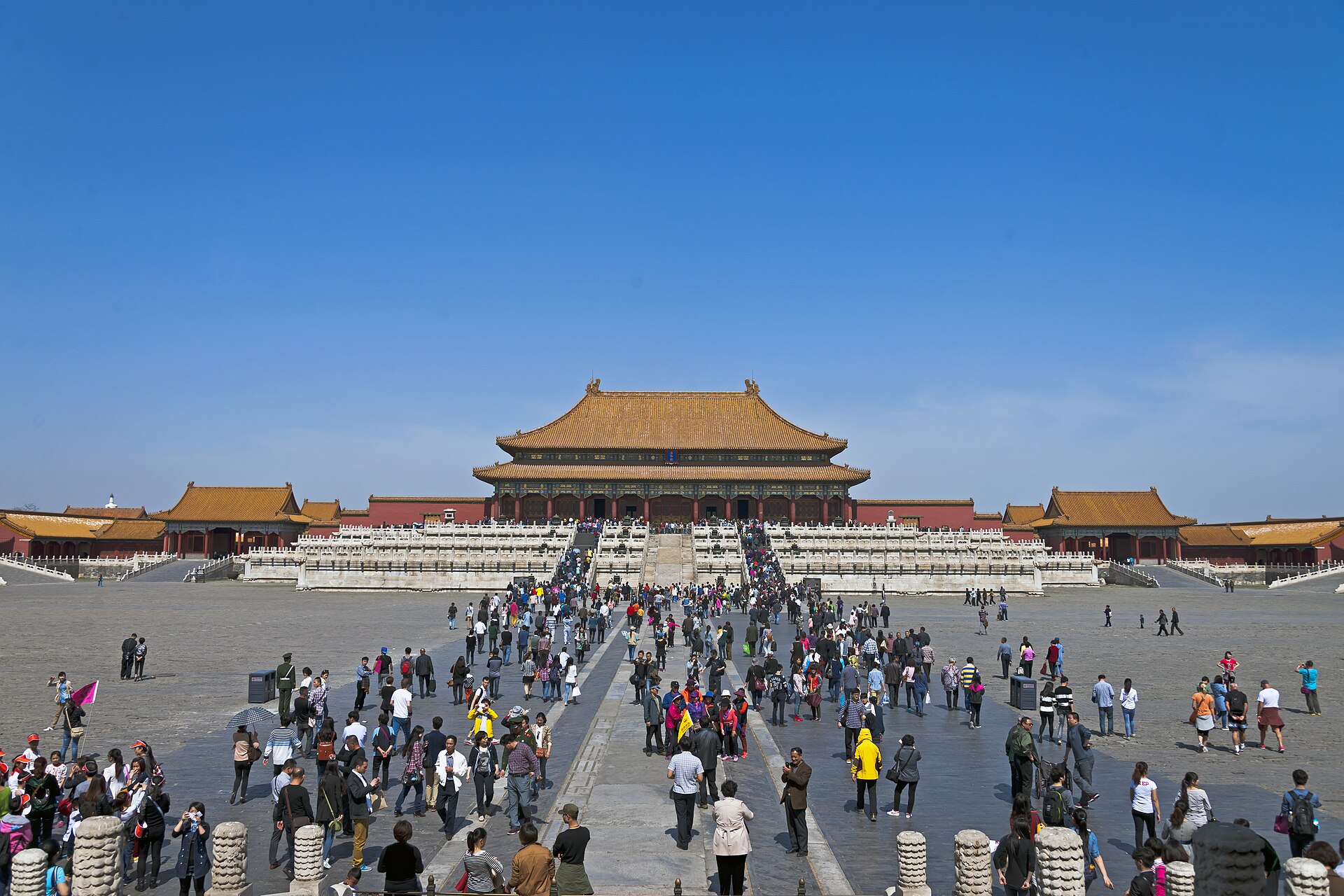
Allow at least three hours. Follow the central ceremonial route but step into the eastern or western courtyards where crowd flow permits. The Palace of Tranquil Longevity area and specialist galleries are better uses of time than trying to enter every open hall.
Afternoon
Eat a late lunch after leaving through the northern Gate of Divine Prowess. Restaurants immediately beside the exit are limited; use a map to find a simple noodle or dumpling shop on Jingshan East Street or take snacks and eat before entering the next park.
Cross the road to Jingshan Park (景山公园). Admission is usually about ¥2, with occasional higher pricing during exhibitions. Re-verify before travel. The climb to Wanchun Pavilion takes roughly 15 minutes up steps and gives the clearest overview of the Forbidden City’s north-south axis.
Allow 60–90 minutes, including recovery time after the palace. The hill is short but stair-heavy and can be slippery after rain.
Evening
Walk or take a short ride north to Shichahai (什刹海). Metro Line 8’s Shichahai station is useful if you return here from your hotel rather than walking directly.
Explore the lakeside around Qianhai and Houhai, then move into the quieter lanes rather than remaining on the bar-heavy main strip. Yandai Xiejie (烟袋斜街) is convenient but commercial; nearby hutong lanes give a better sense of the street pattern.
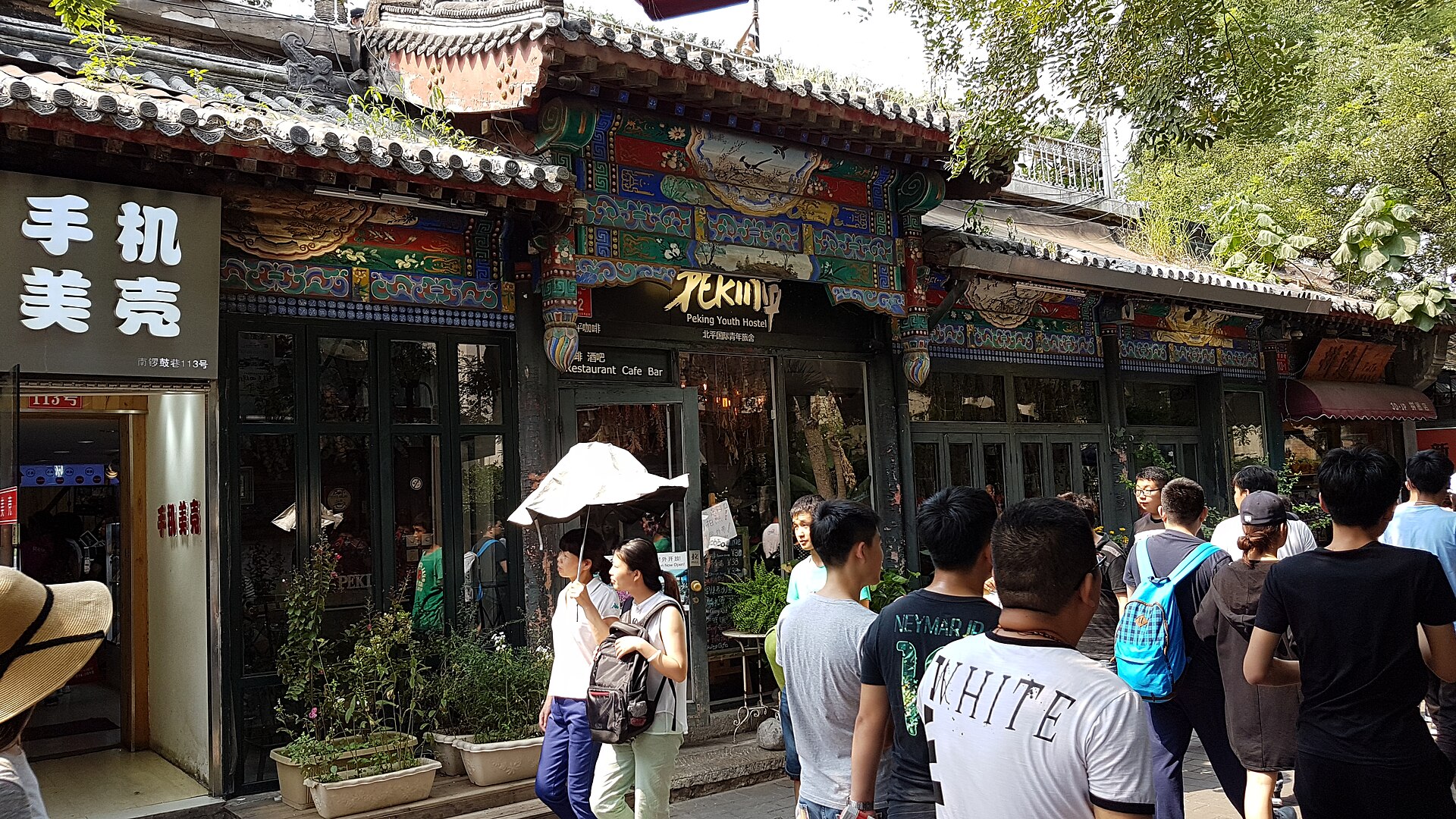
Eat around Di’anmen or Gulou. Beijing-style options include zhajiangmian noodles (炸酱面), boiled dumplings, and lamb hotpot. Expect about ¥40–120 per person at an ordinary restaurant.
Finish by 21:00. Shichahai station provides a straightforward return on Line 8; use Didi if fatigue or the last-train window makes a transfer inconvenient. Metro closing times vary by line and station. Re-verify before travel.
Day 2: Beihai, the Drum Tower, and deeper hutongs
Morning
Enter Beihai Park (北海公园) when it opens for a quieter start. The east or south entrances are practical from the Forbidden City area; Beihai North station on Metro Line 6 serves the park’s northern side.
Basic admission is generally around ¥5–10 depending on season, with a higher through-ticket for separately ticketed sites. Opening times and ticket combinations vary seasonally. Re-verify before travel.
Allow two to three hours. Walk around Qionghua Island, climb toward the White Dagoba if open, and follow the eastern lakeshore north. This is deliberately slower than Day 1: Beihai works as a functioning city park as well as an imperial landscape.
Continue past the northern lakes toward the Drum Tower and Bell Tower (鼓楼、钟楼), about 20–30 minutes on foot. Their interiors generally require separate inexpensive tickets and include steep stairs. Performance schedules, opening hours, and admission prices can change. Re-verify before travel.
Afternoon
Have lunch near Gulou East Street or Baochao Hutong. Then explore a compact hutong circuit through Baochao Hutong (宝钞胡同), Fangzhuanchang Hutong (方砖厂胡同), and the lanes around Wudaoying Hutong (五道营胡同). These are public residential streets, not museum exhibits: keep voices down, do not photograph people through doorways, and do not enter courtyards without permission.
Walk east toward the Confucius Temple and Imperial College (孔庙和国子监博物馆). The complex normally requires a ticket and approximately 60–90 minutes. Opening days, hours, and admission are subject to change. Re-verify before travel. If it is closed, spend longer in the hutongs and continue directly to the Lama Temple.
The Lama Temple (雍和宫) is a short walk away. Allow about 90 minutes. Admission is usually around ¥25, and real-name online booking may be required. Dress and behave as you would at an active religious site. Re-verify before travel. Yonghegong Lama Temple station is served by Metro Lines 2 and 5.
Evening
Continue south to Guijie, or Ghost Street (簋街), centered on Dongzhimen Inner Street. Walk for about 20 minutes or take Line 5 one stop toward Beixinqiao.
Choose a busy restaurant with clear pricing rather than automatically joining the longest queue. Spicy crayfish is the street’s best-known specialty, but hotpot, grilled fish, and less spicy dishes are widely available. A full meal typically costs ¥80–180 per person.
This day leaves out the commercial Nanluoguxiang strip except as an optional short detour. Its crowds add little if you have already walked the quieter hutongs.
Day 3: The Great Wall at Mutianyu
Morning
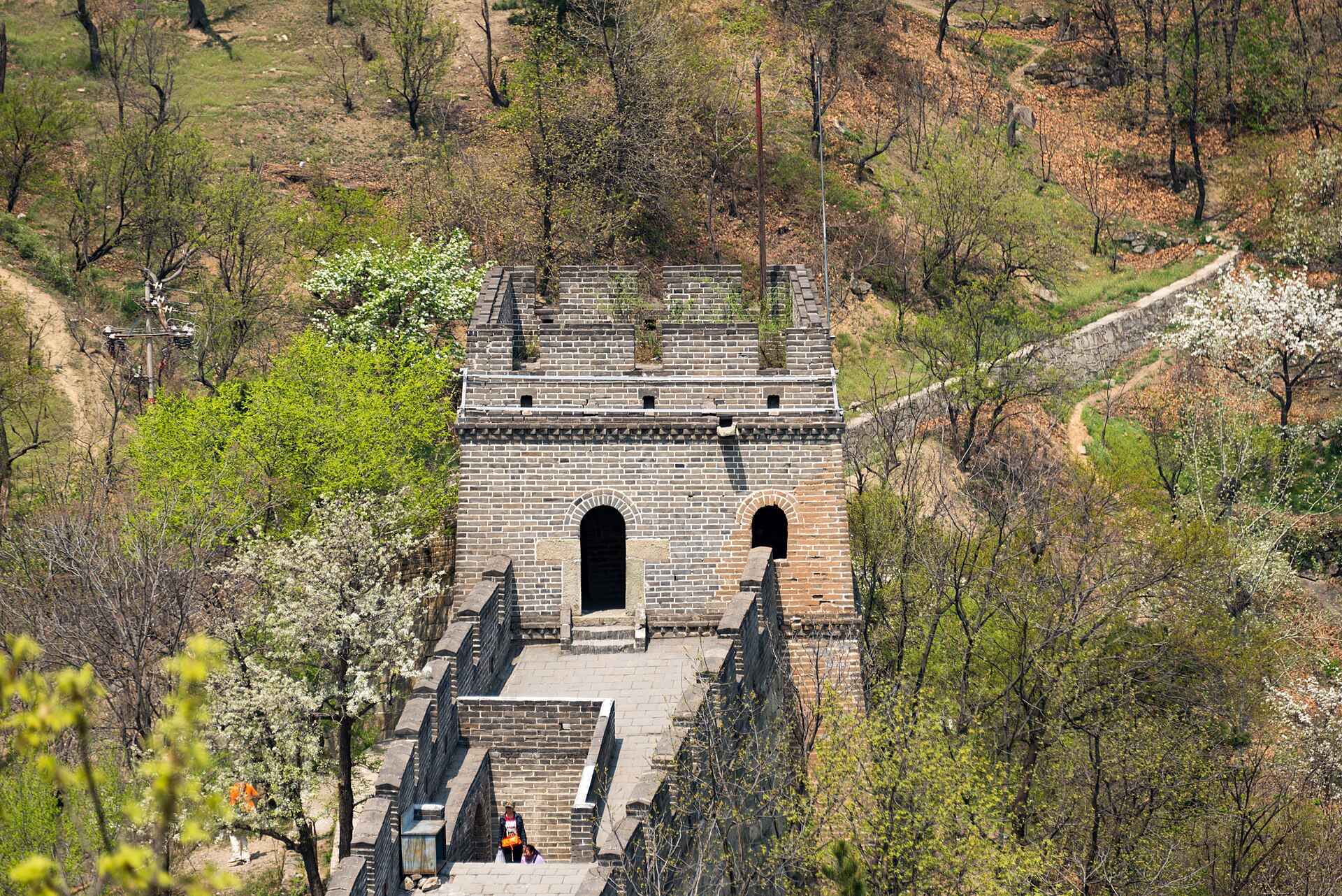
Leave central Beijing between 06:30 and 07:00 for Mutianyu Great Wall (慕田峪长城), roughly 70 kilometres northeast of the center. Road travel commonly takes 1½–2½ hours each way, depending on traffic.
The simplest choices are:
- A reputable small-group transfer with clearly stated pickup and return arrangements.
- A private Didi or hired car, best for two or more travelers. Confirm whether the driver will wait.
- A public or tourist bus from central Beijing or the Dongzhimen area. Routes, departure points, seasonal services, and ticketing can change, so obtain current instructions from an official source. Re-verify before travel.
Independent public transport is cheaper but involves more uncertainty and may require a local bus or taxi connection in Huairou. An organized transfer is simpler if you cannot read Chinese or need a fixed return.
Admission to the scenic area is approximately ¥40–45. Internal shuttle buses, cable cars, chairlifts, and the toboggan cost extra; combination prices and operating conditions vary. Re-verify before travel. Bring your passport if the booking is linked to it.
Afternoon
Allow four to five hours at Mutianyu, including ticketing, shuttle transfers, and lunch. A practical moderate route is to ascend by cable car, walk between several watchtowers, and descend by cable car. Strong walkers can choose a longer section, but repeated steep climbs make distances deceptive.
The chairlift-and-toboggan combination is weather-dependent and may close for wind, rain, snow, or maintenance. Do not structure the day around it being available. Re-verify before travel.
Eat at the visitor area before returning, or carry snacks and water. Food prices are higher than in central Beijing. Wear shoes with good grip; the restored wall still has steep, uneven steps and exposed sections.
Aim to leave by 15:30–16:00. Confirm the final public-bus departure before starting the hike. A missed connection can produce an expensive ride back to Beijing.
Evening
Return to central Beijing around 18:00–19:30. Keep the evening light. Eat near your hotel or around Dongzhimen if your transport terminates there.
Allow additional road time on weekends and public holidays. If poor weather makes the wall unsafe or obscures it completely, move Day 6 forward and attempt Mutianyu on a clearer day.
Day 4: Temple of Heaven, Qianmen, and Dashilan
Morning
Reach the Temple of Heaven (天坛公园) around opening time. Tiantandongmen station on Metro Line 5 is beside the east gate and gives the easiest approach for most visitors.
Basic park admission and the combined ticket covering the main monuments are priced separately; the combined ticket is generally about ¥34 in the main season. Seasonal prices, monument hours, and ticket rules change. Re-verify before travel.
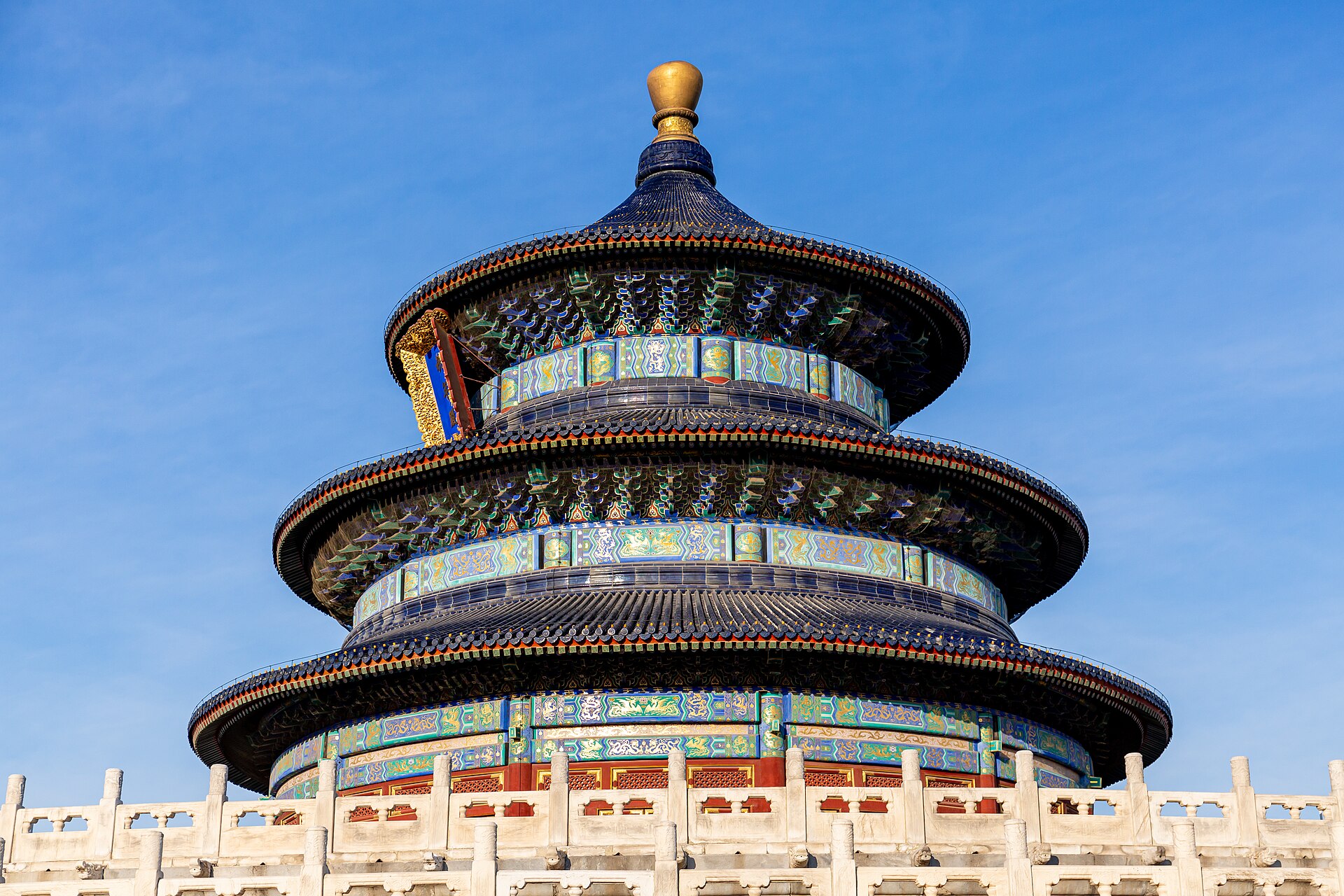
Allow three hours. Begin with the surrounding park, where local residents often exercise, sing, or play games in the morning. Continue to the Hall of Prayer for Good Harvests, Imperial Vault of Heaven, Echo Wall, and Circular Mound Altar. The central route involves extensive walking but few severe climbs.
Exit through the west or north side for lunch. Nearby options are functional rather than destination dining; a short taxi ride toward Qianmen gives a wider selection.
Afternoon
Continue to Qianmen (前门), served by Metro Lines 2 and 8. Walk south along Qianmen Street, then turn into Dashilan (大栅栏) and the side lanes around Yangmeizhu Xiejie (杨梅竹斜街).
Spend two to three hours here rather than treating Qianmen Street as a shopping checklist. The rebuilt main street is useful for orientation, while the smaller lanes show the district’s irregular historic street layout. Expect crowds and watch for bicycles and delivery scooters.
For lunch, consider roast duck if you want one formal Beijing meal. Reserve a well-established restaurant rather than queuing at the most visible branch. A full duck meal commonly costs ¥150–350 per person depending on restaurant and extras.
Evening
Walk south or take a short ride to the Tianqiao and Yongdingmen section of Beijing’s central axis. If energy is low, remain around Dashilan for dinner and return from Zhushikou station on Lines 7 and 8.
An evening performance of Peking opera or acrobatics can fit here, but venues, schedules, and ticket platforms change. Book only through the venue or a reputable ticket seller and confirm whether English surtitles are provided. Re-verify before travel.
Avoid unofficial “tea ceremony” invitations around major tourist streets. Agree on prices before ordering tea, alcohol, or snacks in unfamiliar venues.
Day 5: Summer Palace and Old Summer Palace
Morning
Take Metro Line 4 to Beigongmen station and enter the Summer Palace (颐和园) from the north. The northern approach begins with steps and Suzhou Street; travelers avoiding stairs should use a taxi to a flatter gate and confirm current accessibility arrangements.
Admission is generally around ¥20–30 for the grounds, with a higher combined ticket covering separately ticketed areas. Seasonal hours, boat operations, and ticket packages vary. Re-verify before travel.
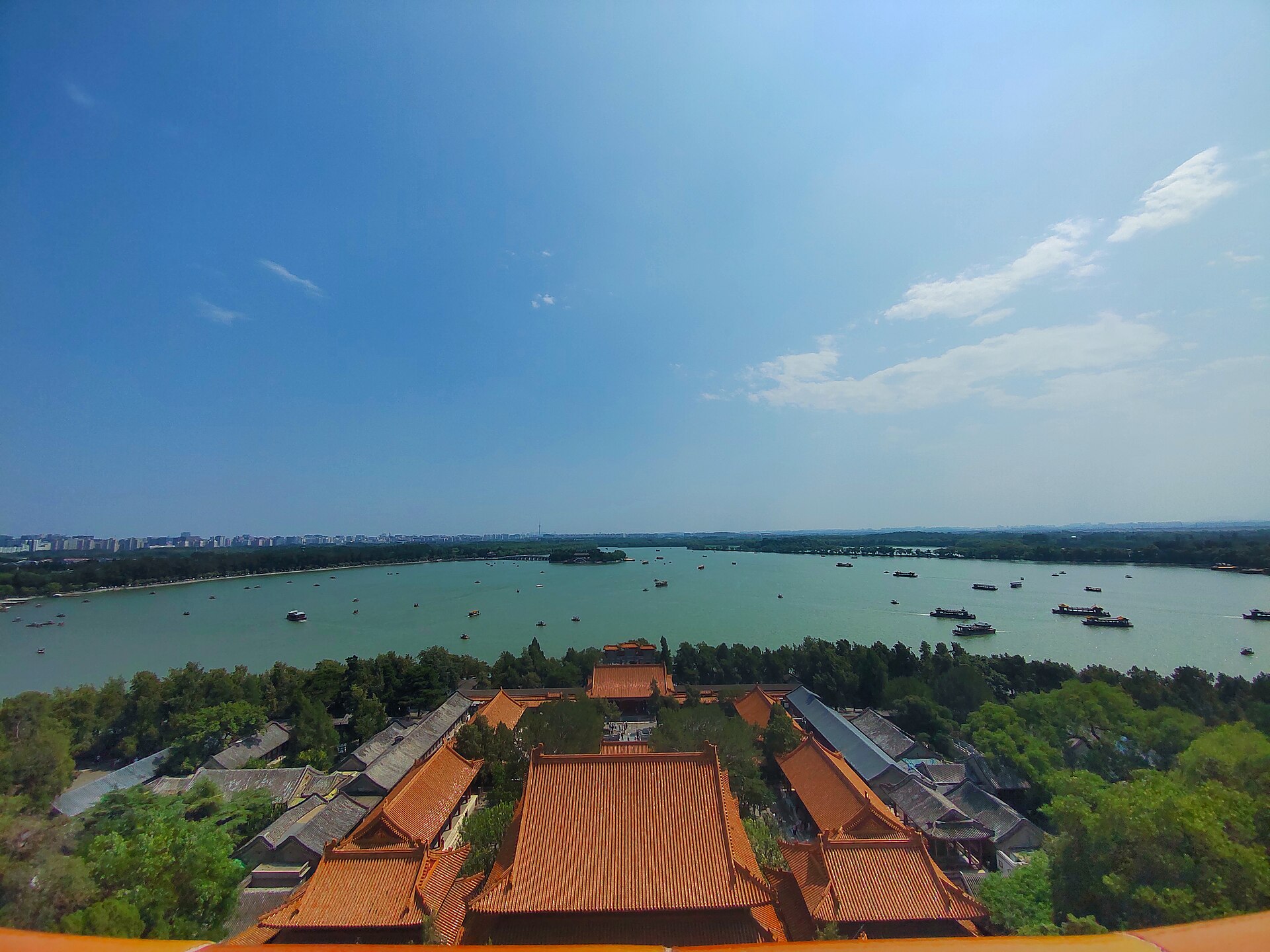
Allow four to five hours. Cross Longevity Hill, visit the Buddhist Fragrance Pavilion area if open, walk part of the Long Corridor, and continue along Kunming Lake. Do not attempt every building. A boat can reduce walking when operating, but service is seasonal and weather-dependent. Re-verify before travel.
Have an early lunch inside the grounds or near an exit. Food choices in the park are limited, so carrying snacks is sensible.
Afternoon
Travel to the Old Summer Palace, or Yuanmingyuan (圆明园), about 15–25 minutes by taxi depending on traffic. Metro Line 4 also serves Yuanmingyuan Park station, although reaching it may require backtracking to a suitable Summer Palace exit.
Admission is inexpensive, with separate or combined access for the Western Mansions ruins and some areas; allow approximately ¥25 for a through-ticket. Prices, closing times, and internal shuttle arrangements vary. Re-verify before travel.
Spend two to three hours here. The park is much larger than the famous stone ruins suggest. Focus on one lake section and the Western Mansions rather than crossing the entire site. The scale and surviving foundations provide useful context after the restored Summer Palace.
Evening
Continue to Wudaokou (五道口) on Metro Line 13 or return via Line 4 toward Zhongguancun. Wudaokou is a university district with inexpensive Chinese, Korean, and international food; Zhongguancun offers modern malls and an easy indoor dinner if the weather is poor.
Expect 12–16 kilometres of walking today. If that is excessive, visit only the Summer Palace and finish with an early dinner. Combining both parks is realistic only if you start early and accept a selective visit.
Day 6: 798, Caochangdi, and Sanlitun
Morning
Begin at 798 Art District (798艺术区) around 10:00, when galleries and cafés are more likely to be open. Gaojiayuan station on Metro Line 12 serves the district; verify the most convenient exit for your chosen gallery. Re-verify before travel. From other parts of Beijing, Didi may save substantial transfer time.
The district itself is free. Individual museums and exhibitions range from free to roughly ¥20–100. Most spaces open later than parks and many close on Mondays; exhibitions, opening hours, and admission change frequently. Re-verify before travel.
Spend two to three hours walking the former factory compounds around 798 Road and Jiuxianqiao Road. Choose two or three exhibitions after checking same-day listings rather than trying to visit every gallery.
Afternoon
Eat inside 798, where meals generally cost more than in a residential neighborhood, or take a short taxi north to Caochangdi (草场地). Caochangdi has studios and galleries dispersed through a village-like street network, but venues turn over and some operate only during exhibitions. Confirm a specific destination before making the trip. Re-verify before travel.
If no worthwhile exhibition is open, use the afternoon for Chaoyang Park (朝阳公园) instead. The park provides a lighter, local-life break after five days of major sights. Admission policies and opening times should be checked before departure. Re-verify before travel.
Evening
Finish in Sanlitun (三里屯). From 798, a taxi commonly takes 25–45 minutes depending on traffic. By metro, use Line 12 and connecting lines, then walk from the closest practical station; route planners may change as the network develops.
Walk through the Taikoo Li area, then eat on or around Sanlitun Road. This is contemporary commercial Beijing rather than a historic district, and it provides a useful contrast with the first five days. Ordinary meals cost roughly ¥60–180; bars and international restaurants can cost considerably more.
Tuanjiehu station on Metro Line 10 is a common return point, approximately 15–20 minutes on foot from central Sanlitun. Check the final train for your direction. Re-verify before travel.
Day 7: Chengde day trip or a flexible Beijing day
Morning
For a substantial final-day trip, travel to Chengde (承德) in Hebei province. The city’s Mountain Resort and surrounding imperial temples provide a different view of Qing imperial geography and are worth the journey if you still have energy for a long day.
High-speed trains commonly run from Beijing Chaoyang railway station to Chengde South, taking approximately one hour. Services, fares, and departure stations can change. Re-verify before travel. Book through Railway 12306 or Trip.com using the exact passport details of every traveler.
Arrive at Beijing Chaoyang station at least 45–60 minutes before departure for entry, security, and platform finding. Bring the physical passport used for the ticket. Choose a train arriving in Chengde by about 09:00.
Chengde South is outside the historic center. A taxi or ride-hailing trip to the Mountain Resort (避暑山庄) generally takes about 25–40 minutes depending on traffic. Show the Chinese name and pin the official entrance.
Afternoon
Spend four to five hours at the Mountain Resort. The complex is extremely large, combining palace buildings, lakes, plains, and wooded hills. Admission is commonly around ¥90–130 depending on season, while internal transport costs extra. Opening hours, prices, accessible areas, and ticket rules are volatile. Re-verify before travel.
Prioritize the palace and lake zone. Use an official internal vehicle only if you want to cover the mountainous outer circuit; walking the entire estate is unrealistic on a day trip.
After lunch, choose one of the nearby Outer Eight Temples rather than attempting several. Putuo Zongcheng Temple (普陀宗乘之庙) is the most consequential choice for many first-time visitors, but it requires a taxi from the resort. Temple hours, admission, and last entry should be confirmed before leaving Beijing. Re-verify before travel.
Independent travel is practical if train tickets and attraction details are booked in advance. An organized tour is simpler only if it includes round-trip transport, clearly named sites, admission details, and enough time inside the resort. Avoid tours built around shopping stops.
Evening
Book a return train that leaves enough time to reach Chengde South without rushing, ideally no earlier than 18:00 after a temple visit. Allow at least 45 minutes for the taxi transfer and 30–45 minutes for station security and boarding. Re-verify before travel.
After arriving at Beijing Chaoyang, use Metro Line 3, a connecting metro route, or Didi to return to your hotel. Confirm the last metro connections if your train arrives late. Re-verify before travel.
For an in-city alternative, make this a flexible museum and rest day. Reserve the National Museum of China (中国国家博物馆) for the morning, then walk in Ritan Park (日坛公园) or browse the bookstores and cafés around Longfusi (隆福寺). The National Museum is normally free with real-name advance booking, commonly closes on Mondays, and requires the registered passport. Reservation procedures, entry times, and closure days must be checked. Re-verify before travel.
Practical information
Where to stay
Dongcheng is the most efficient base. The areas around Dongsi, Dengshikou, Wangfujing, or a well-connected Line 5 station reduce transfers for the imperial core, Temple of Heaven, hutongs, and railway connections. Confirm that the hotel is licensed and willing to register foreign guests before booking.
Walking and accessibility
Expect roughly:
- Days 1, 2, 4, and 6: 8–13 kilometres.
- Day 3: highly variable, with steep and uneven Great Wall stairs.
- Day 5: 12–16 kilometres if visiting both palace parks.
- Day 7: 8–14 kilometres in Chengde.
The Forbidden City, Jingshan, Mutianyu, Summer Palace, and Chengde include cobbles, thresholds, slopes, or stairs. Wheelchair routes exist at some major sites but may bypass important sections. Confirm current lift, ramp, and accessible-entrance arrangements directly with each attraction. Re-verify before travel.
Transport and stations
Beijing’s metro generally operates from early morning until late evening, but first and last trains vary by station and direction. Re-verify before travel. Security screening is standard, so allow extra time and avoid carrying prohibited knives, aerosols, or flammable items.
Beijing has several major railway stations. Match the Chinese and English station name on the ticket exactly; Beijing Station, Beijing South, Beijing West, Beijing North, and Beijing Chaoyang are not interchangeable.
For airport transfers, use the Airport Express, metro, or official taxi queue according to your arrival airport and hotel location. Late arrivals may miss the final train. Airport-line hours, fares, and interchange arrangements can change. Re-verify before travel.
Budget
Excluding accommodation, shopping, international travel, and optional premium Great Wall transport, allow approximately:
- Ordinary Beijing days: ¥250–500 per person for admissions, metro, and regular meals.
- Mutianyu day: ¥350–800 depending on transfer and cable-car choices.
- Chengde day: ¥450–900 including trains, local taxis, admissions, and meals.
Private cars, formal roast-duck meals, performances, bars, and high-end restaurants raise these figures substantially.
Timing and crowds
Avoid scheduling the Forbidden City or major museums on Monday until their current opening calendars are confirmed. Public holidays—especially the Lunar New Year period, the early-May holiday, and National Day week around 1 October—bring severe crowds and ticket pressure.
Beijing summers can be hot, humid, and stormy. Winters are cold, dry, and windy, particularly on the Great Wall. Spring can bring dust, while air quality varies throughout the year. Check the daily forecast and official air-quality information before outdoor-heavy days.
Useful Chinese names
- Forbidden City: 故宫博物院
- Tiananmen Square: 天安门广场
- Jingshan Park: 景山公园
- Beihai Park: 北海公园
- Shichahai: 什刹海
- Mutianyu Great Wall: 慕田峪长城
- Temple of Heaven: 天坛公园
- Summer Palace: 颐和园
- Old Summer Palace: 圆明园
- 798 Art District: 798艺术区
- Beijing Chaoyang railway station: 北京朝阳站
- Chengde South railway station: 承德南站
- Chengde Mountain Resort: 避暑山庄
Re-verify before travel
- Entry, visa-free-entry, and transit eligibility for your passport and route.
- Alipay and WeChat verification, foreign-card support, fees, limits, and Beijing transport compatibility.
- Mainland connectivity restrictions and current VPN conditions.
- Tiananmen Square, Forbidden City, Lama Temple, and museum reservation procedures.
- Attraction prices, opening hours, weekly closures, passport rules, and ticket-release dates.
- Mutianyu buses, tourist transfers, cable cars, shuttle services, and final return times.
- Summer Palace boat operations and seasonal ticket combinations.
- Current exhibitions and closure days at 798 and Caochangdi.
- Beijing metro first and last trains, station exits, and airport connections.
- Beijing–Chengde train times, fares, tickets, station access, and Chengde attraction hours.
The $2.99 PDF is pay-what-you-want — it keeps this site ad-free and independent.
Last verified 2026-10-05. Prices, hours and visa rules change — confirm key bookings before you go.